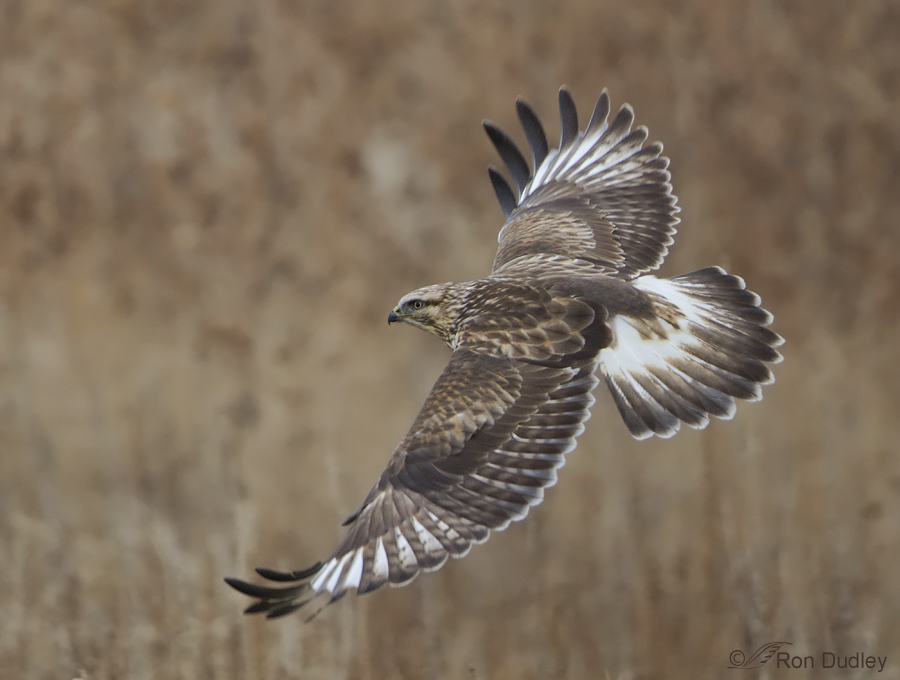
Category: Diurnal Raptors
The Roughies Are Coming!
Early this morning, before leaving to look for birds on Antelope Island, I saw a Facebook post by my friend, bird aficionado and artist extraordinaire Bryce Robinson. It was a simple post, saying simply ” “I felt a change in the air today. The Roughies are coming…” and it was illustrated with one of his fine drawings – a portrait of a Rough-legged Hawk. The “change in the air” that Bryce was referring to was our first nippy cold morning after a long, hot summer and such changes always bring thoughts to mind of the return of the Rough-legged Hawk.
Then I spent the morning on the island looking in vain for birds (it’s very slow out there right now) so as I drove around my mind wandered regularly to thoughts of Roughies – inspired by Bryce’s post and the chilly temps (51 degrees on the causeway).
A Red-tailed Hawk And Red Lichen
Mia and I have been visiting the Centennial Valley for about five years now (usually 3-4 times every summer) and at least once each trip, as we passed this lichen-covered rock next to the road, I would mention to her how much I would like to photograph a raptor on one of these red rocks. There’s just something about my fondness for each, the lichen covered rocks and birds of prey, that has made that kind of photograph a personal goal. But it never happened for some reason. The birds of prey just don’t seem to perch on them, preferring instead the fence posts, utility poles and trees that are usually a little too far away from the road. It’s been an unfulfilled goal for a long time.
But all that changed last week.
Red-tailed Hawk Versus Northern Harrier – Aerial Confrontation
Northern Harriers are well-known for aggressive behavior toward larger raptors intruding on their territory but seldom chase off raptor species smaller than themselves. This interesting behavioral quirk apparently results from the ability of harriers to steal food from smaller raptors. It’s easier to pilfer prey from a smaller species than it is to catch it yourself so harriers let them hang around.
Red-tailed Hawk Gliding To Its Prey
About a year ago I spent some time with this juvenile Red-tailed Hawk as it honed its hunting skills. It wasn’t yet a very good hunter but it sure tried hard. It typically perched on top of some rocky outcrops as it scanned the grassy slopes below for voles. Then it would swoop down and make its attempt, though it seldom caught anything that I was aware of. Learning to hunt isn’t easy and the price to pay for failure is a dear one.
What’s Happening To Our Kestrels?
Recently I’ve been reading some disturbing reports about the decline of the American Kestrel in North America. And I’m talking about a drastic decline! I’ve speculated about just that in a previous post, based on my own recent observations in northern Utah but I’ve been hoping that what I’ve noticed is only a local and temporary phenomenon. Apparently it isn’t.
Young Ferruginous Hawk Siblings
Why Did The Red-tailed Hawk Stand On The Road?
Male Harrier Cruising The Causeway
I have a strong affinity for Northern Harriers ( a little secret that’s difficult to conceal, given the vanity plates on my pickup). And though I love to photograph either sex there’s just something about the adult males that has a special appeal for me. Part of that attraction is probably the relative rarity of the adult male colors since the juvenile colors of both sexes resemble that of the female.
The males are called the “gray ghost” for good reason.
Injured Prairie Falcon Report From The Centennial Valley
Swainson’s Hawk Optical Illusion
Each time I look at this image, at first the wing above the head appears to be the birds right wing on the far side of the body. But then a few seconds later my brain tells me that’s impossible because the lower wing is obviously the right wing and it’s impossible (or at least highly unlikely) for the hawk to have two right wings.
Screaming Dark Morph Ferruginous Hawk In Flight
Last week, partially in an effort to get away from the aggravations of the blog hosting problems I’d been having, I decided to make the extra long drive to extreme northern Utah in a quest for Swainson’s Hawks. We found quite a few and a delightful bonus was a plethora of Ferruginous Hawks in the same area.
Feathered Photography Has Risen Again!
Flaring Rough-legged Hawk
Dark Morph Swainson’s Hawk And More
The Roughies Are Coming!
Early this morning, before leaving to look for birds on Antelope Island, I saw a Facebook post by my friend, bird aficionado and artist extraordinaire Bryce Robinson. It was a simple post, saying simply ” “I felt a change in the air today. The Roughies are coming…” and it was illustrated with one of his fine drawings – a portrait of a Rough-legged Hawk. The “change in the air” that Bryce was referring to was our first nippy cold morning after a long, hot summer and such changes always bring thoughts to mind of the return of the Rough-legged Hawk.
Then I spent the morning on the island looking in vain for birds (it’s very slow out there right now) so as I drove around my mind wandered regularly to thoughts of Roughies – inspired by Bryce’s post and the chilly temps (51 degrees on the causeway).
A Red-tailed Hawk And Red Lichen
Mia and I have been visiting the Centennial Valley for about five years now (usually 3-4 times every summer) and at least once each trip, as we passed this lichen-covered rock next to the road, I would mention to her how much I would like to photograph a raptor on one of these red rocks. There’s just something about my fondness for each, the lichen covered rocks and birds of prey, that has made that kind of photograph a personal goal. But it never happened for some reason. The birds of prey just don’t seem to perch on them, preferring instead the fence posts, utility poles and trees that are usually a little too far away from the road. It’s been an unfulfilled goal for a long time.
But all that changed last week.
Red-tailed Hawk Versus Northern Harrier – Aerial Confrontation
Northern Harriers are well-known for aggressive behavior toward larger raptors intruding on their territory but seldom chase off raptor species smaller than themselves. This interesting behavioral quirk apparently results from the ability of harriers to steal food from smaller raptors. It’s easier to pilfer prey from a smaller species than it is to catch it yourself so harriers let them hang around.
Red-tailed Hawk Gliding To Its Prey
About a year ago I spent some time with this juvenile Red-tailed Hawk as it honed its hunting skills. It wasn’t yet a very good hunter but it sure tried hard. It typically perched on top of some rocky outcrops as it scanned the grassy slopes below for voles. Then it would swoop down and make its attempt, though it seldom caught anything that I was aware of. Learning to hunt isn’t easy and the price to pay for failure is a dear one.
What’s Happening To Our Kestrels?
Recently I’ve been reading some disturbing reports about the decline of the American Kestrel in North America. And I’m talking about a drastic decline! I’ve speculated about just that in a previous post, based on my own recent observations in northern Utah but I’ve been hoping that what I’ve noticed is only a local and temporary phenomenon. Apparently it isn’t.
Young Ferruginous Hawk Siblings
Why Did The Red-tailed Hawk Stand On The Road?
Male Harrier Cruising The Causeway
I have a strong affinity for Northern Harriers ( a little secret that’s difficult to conceal, given the vanity plates on my pickup). And though I love to photograph either sex there’s just something about the adult males that has a special appeal for me. Part of that attraction is probably the relative rarity of the adult male colors since the juvenile colors of both sexes resemble that of the female.
The males are called the “gray ghost” for good reason.
Injured Prairie Falcon Report From The Centennial Valley
Swainson’s Hawk Optical Illusion
Each time I look at this image, at first the wing above the head appears to be the birds right wing on the far side of the body. But then a few seconds later my brain tells me that’s impossible because the lower wing is obviously the right wing and it’s impossible (or at least highly unlikely) for the hawk to have two right wings.
Screaming Dark Morph Ferruginous Hawk In Flight
Last week, partially in an effort to get away from the aggravations of the blog hosting problems I’d been having, I decided to make the extra long drive to extreme northern Utah in a quest for Swainson’s Hawks. We found quite a few and a delightful bonus was a plethora of Ferruginous Hawks in the same area.