
Dark Morph Swainson’s Hawk And More
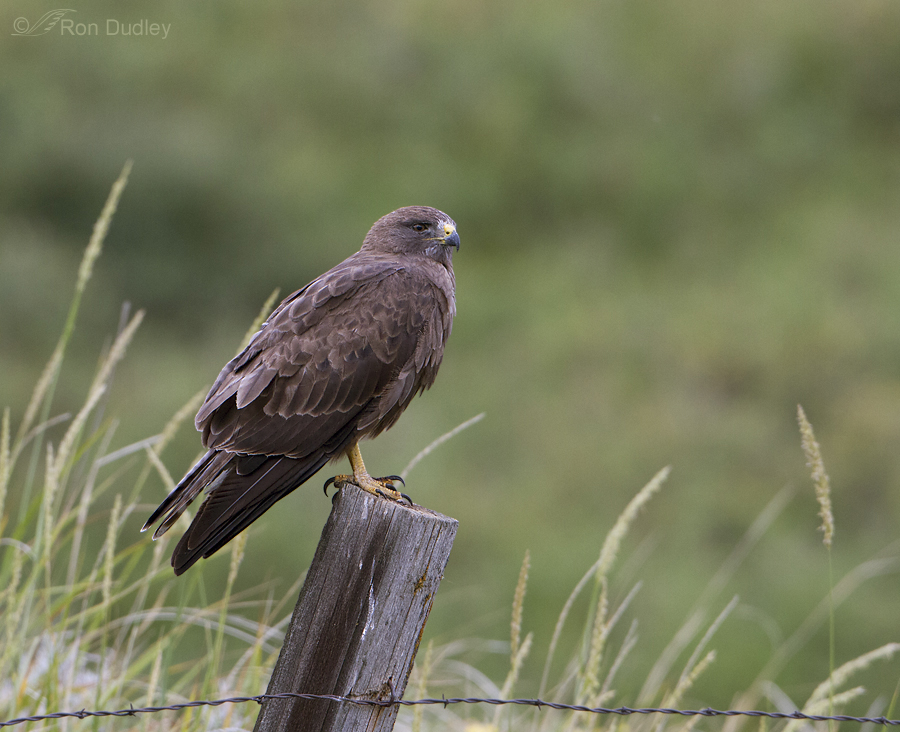
This is the last in my four part series on the color morphs of the Swainson’s Hawk. Today the focus is on the dark morph.

This is the last in my four part series on the color morphs of the Swainson’s Hawk. Today the focus is on the dark morph.
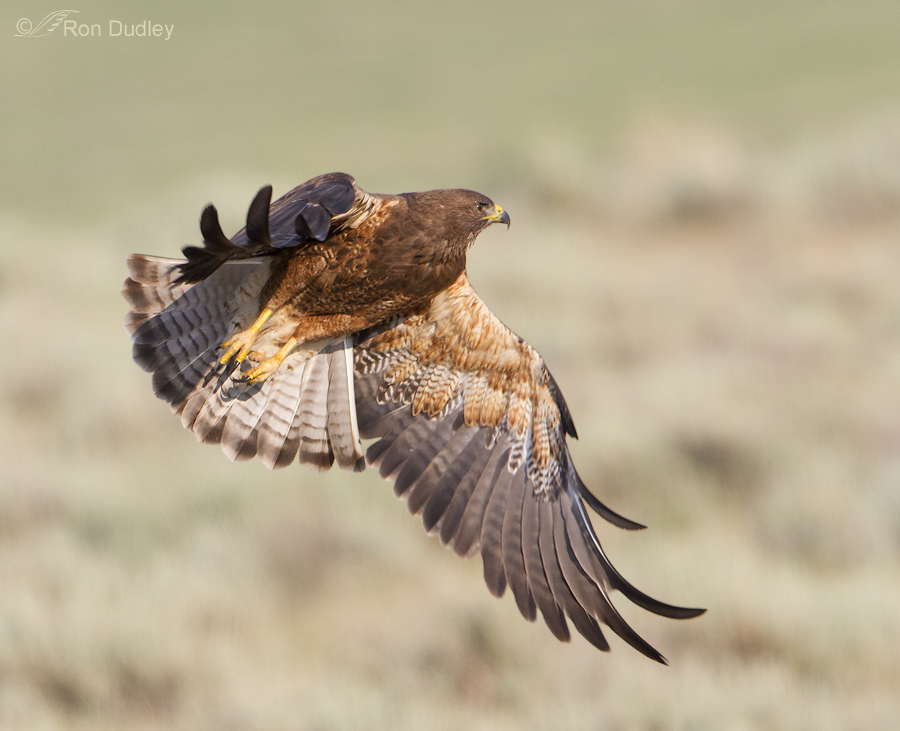
This is the third of my series of four posts on color morphs of the Swainson’s Hawk that I photographed on my last trip to Montana late last month. Todays bird is an intermediate morph.
The three morph categories are convenient to use but color variation of Swainson’s Hawks is almost continuous from darker to lighter individuals so the morph categories are somewhat arbitrary. I sometimes struggle with feeling confident about which category a particular bird belongs in.
My last post was of a juvenile light morph Swainson’s Hawk transitioning into a subadult, this bird is an adult light morph and my next post will be of a dark morph Swainson’s (and perhaps an intermediate morph also) – this is turning into a series…
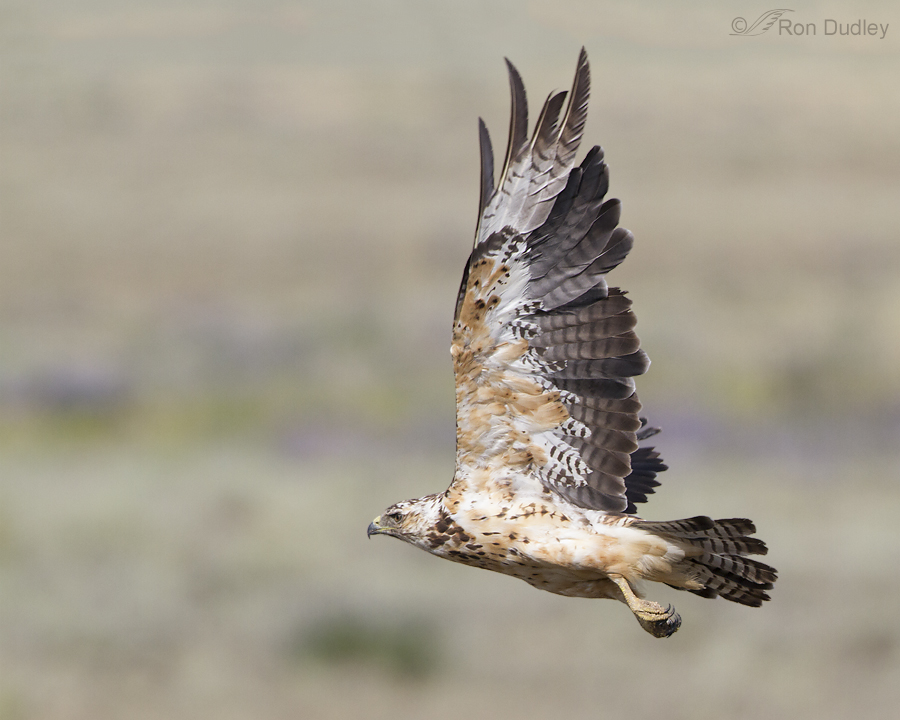
I’m always interested in the color phases of the various raptors I encounter so when we found this subadult Light Morph Swainson’s Hawk on July 25 on our last trip to southwest Montana it got my attention. These worn young birds look white-headed in spring and early summer because of fading – much different from the adults.

When we leave one of our favorite Montana camping spots for the long drive home it means almost 30 miles of extremely dusty dirt/gravel roads through prime bird and wildlife habitat before we hit pavement. We nearly always leave at sunrise in case there are photo opportunities on the way out – typically those opportunities include raptors on posts, poles or in flight, songbirds, elk, deer, pronghorn – even badgers.
If the roads are good (as they are this year) that drive takes at least an hour when I’m pulling my camping trailer but if we find wildlife, as we often do, it can take two hours or more. And believe me, photographing wildlife while you’re pulling a trailer is a bit of a challenge.
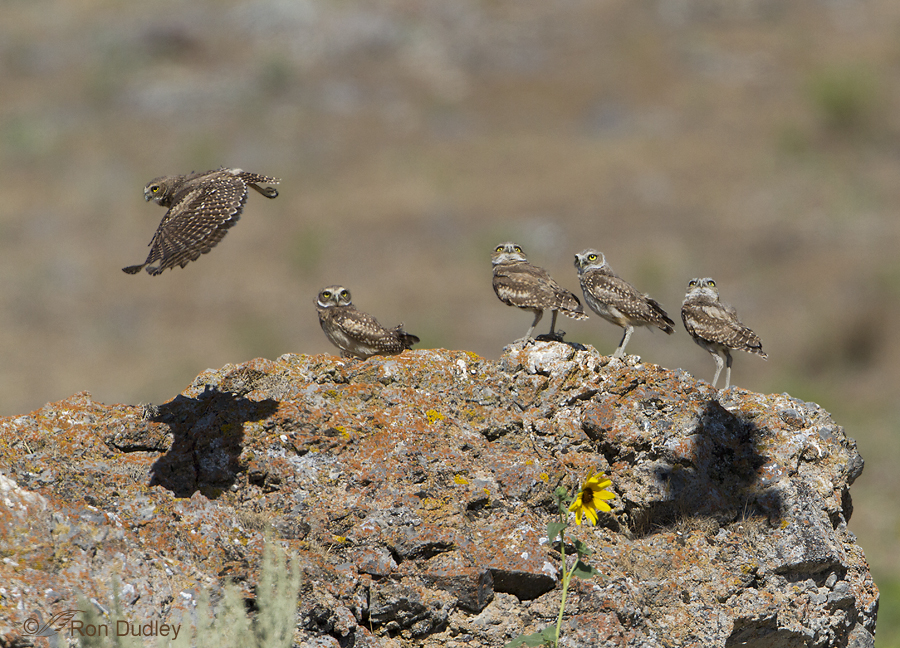
The burrow of these owls is at the base of this huge lichen-encrusted rock and the owls seemed to enjoy perching on it. These juveniles were having a blast with their flight maneuvers.
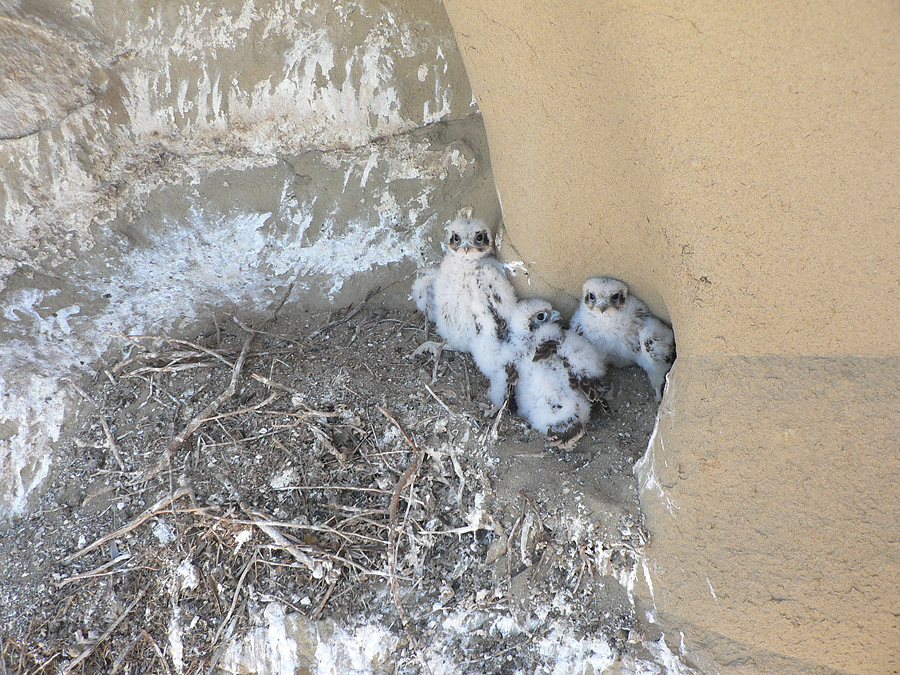
Two days ago I posted about a very tame juvenile male Prairie Falcon I photographed last week in the Centennial Valley of Montana. The bird had two bands and I was extremely curious about where, when and why the falcon was banded and by whom so I asked for any insight my readers might have about the bands. Several of you jumped in with advice and suggestions, for which I’m much appreciative. But it was the superb sleuthing of my friend Mike Shaw that paid huge dividends. Mike did some research and learned that the colored band on the falcon (left foot) was issued to Doug Bell, Wildlife Program Manager for East Bay Regional Park District out of Oakland, California. On Tuesday, figuring that Doug might be interested in knowing that his California bird was now in the wilds of Montana, I emailed him with a link to that blog post and an offer to supply any more information about my encounter with that bird that he’d be interested in. I also asked him if he might tell me a little about his experience with the falcon. Yesterday Doug responded generously with information and photos. Since many of my readers expressed an interest in knowing about the history of this young bird I decided to update you with a new post rather than add an addendum to the previous post that many might not see. Besides, there’s a lot of new “stuff” here. Image property of East Bay Regional Park District – used by permission Doug and his team banded “my” Prairie Falcon…
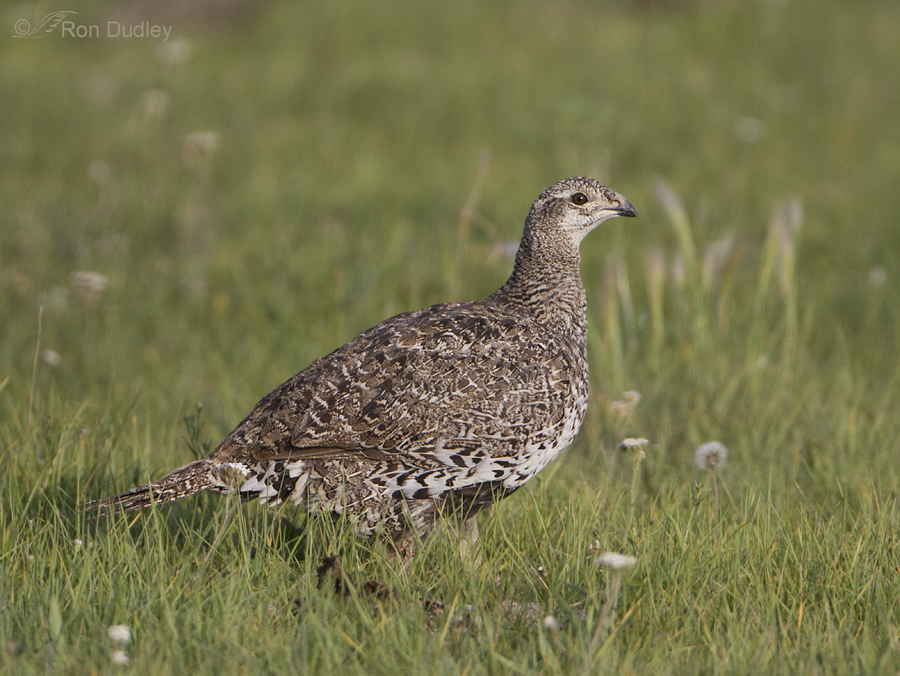
I was driving the dirt roads while on the lookout for raptors (mostly) when out of the corner of my eye to the far right I saw (just barely) a flock of Mallards flush up from the barrow pit next to the road and just a few feet away. I gave them a quick glance and drove on but a couple of seconds later Mia hollered out from the back seat her patented “Stop, bird!”, which I immediately did. Turned out they weren’t Mallards, they were Sage Grouse – about a dozen of them.
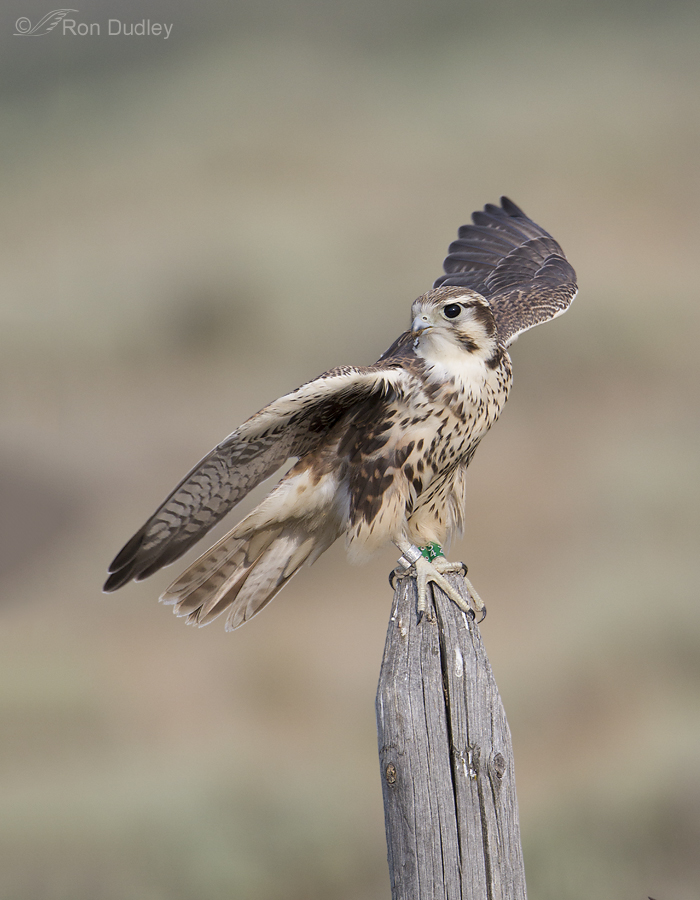
In yesterday’s post about grasshopper-eating Prairie Falcons I promised that today’s post would also be about Prairie Falcons. It is, but only one of them – probably the most approachable larger falcon that I’ve ever encountered in the wild.
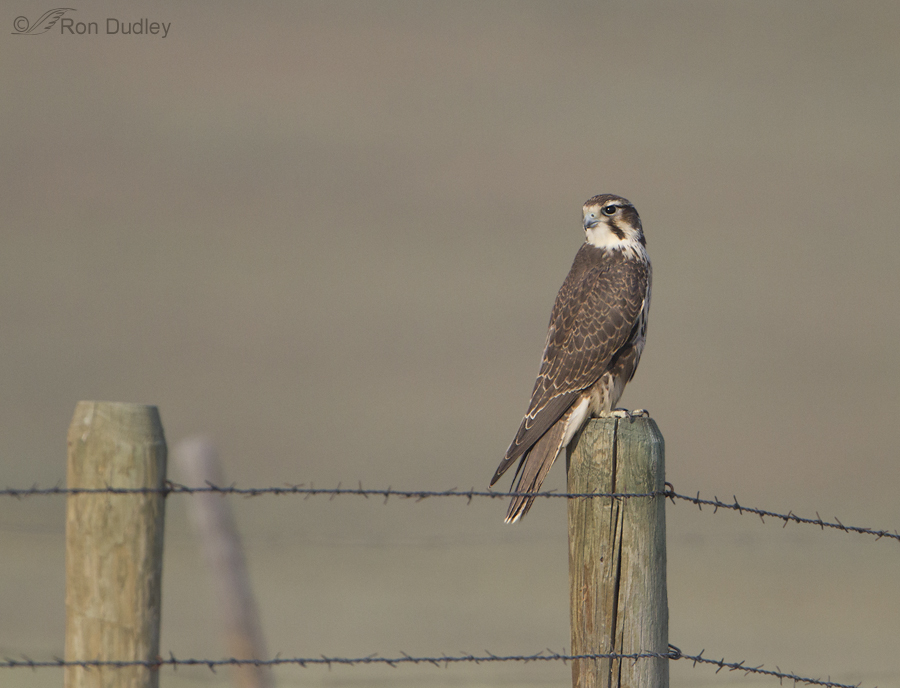
I learned something last week in Montana’s Centennial Valley – Prairie Falcons eat insects.
In the past I’ve only seen them eat birds and small mammals and cursory research had backed up that observation but if you dig a little deeper in your research (Birds of North America Online, for example) you’ll find mention of lizards and insects being included in their diet. My friend (master falconer) Mark Runnels says that “Prairie Falcons will eat anything. In really bad years I have even heard of them feeding on carrion. You’ll never see a Peregrine do that!”
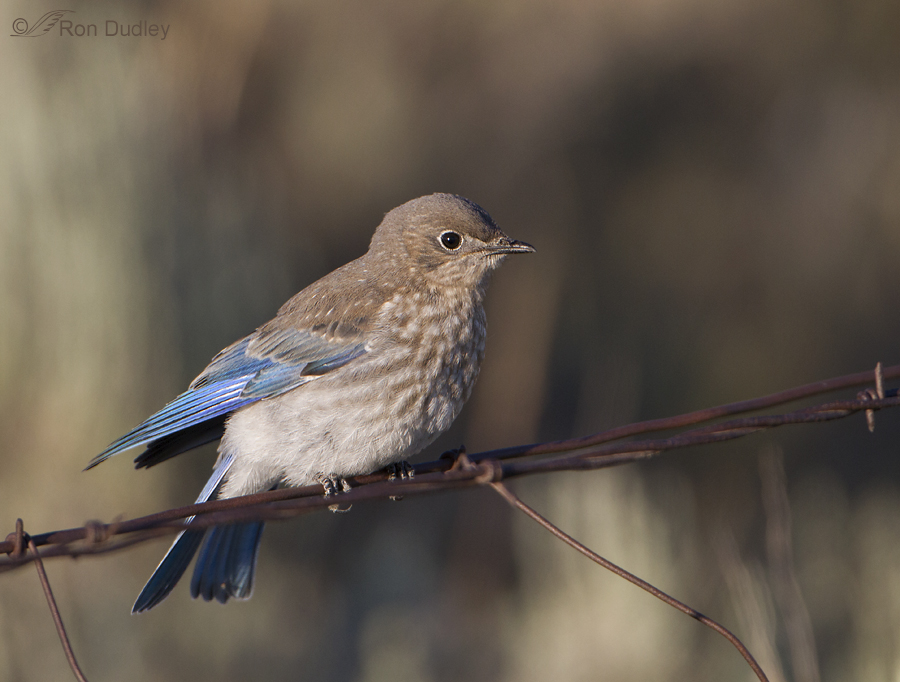
I often photograph Mountain Bluebirds on my Montana trips but I’ve seldom had the opportunity to work with juveniles. That changed last week when we found a young bird hunting from a fence in early morning light.
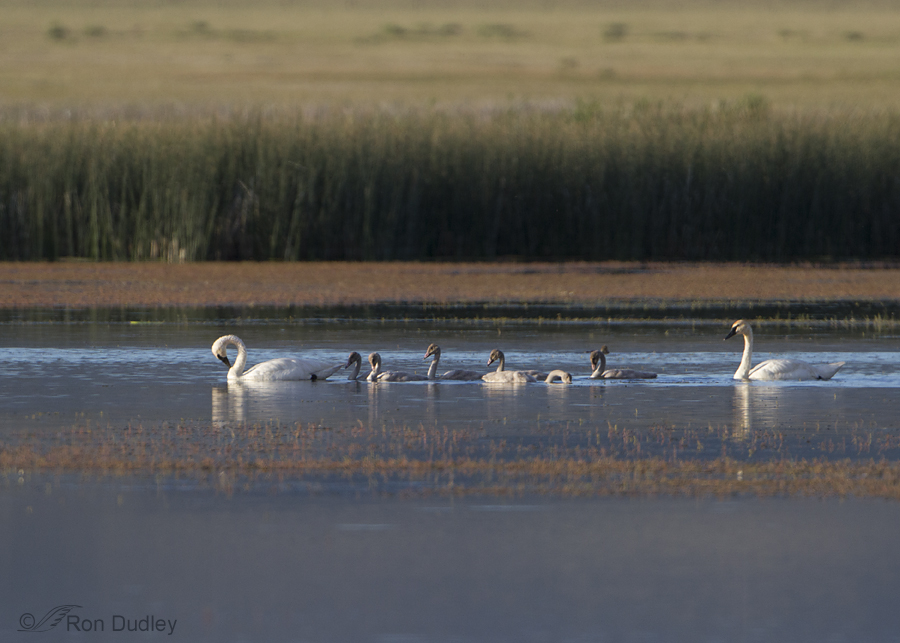
Trumpeter Swans are the largest of all North American waterfowl, weighing up to 30 pounds and having a wingspan of as much as 8 feet. It’s hard to imagine that by the 1930’s this species had been almost wiped out. In 1949 the Director of the U.S. Fish and Wildlife Service said that the Trumpeter Swan was “the fourth rarest bird now remaining in America”. But thankfully recent intense swan restoration and management programs have brought the species back from the brink of extinction.
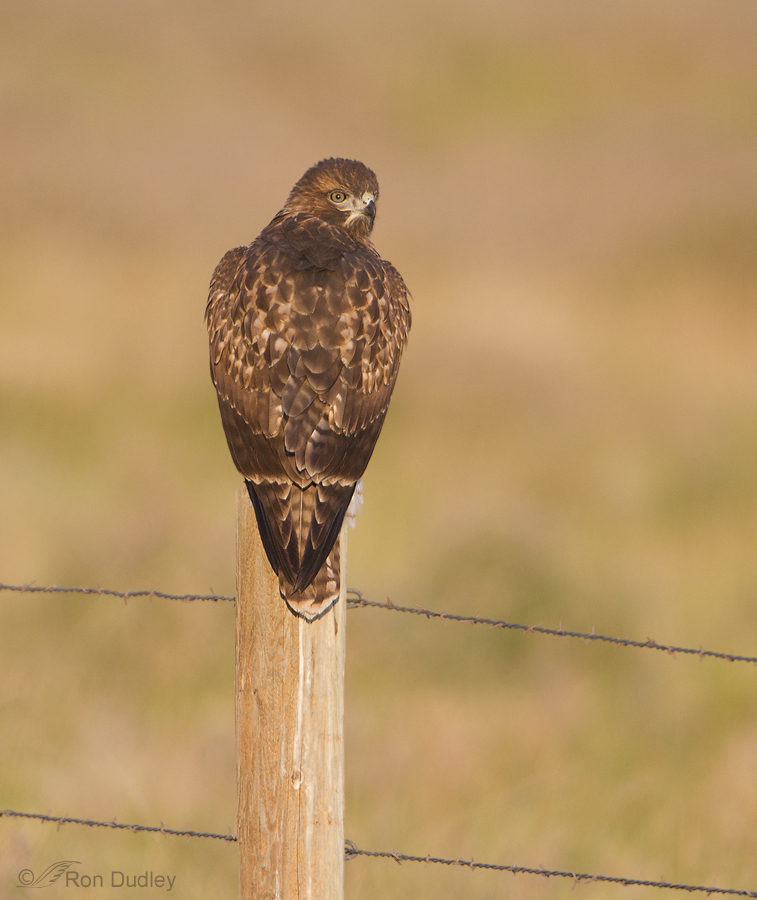
Typically I don’t have high hopes of getting any decent shots during the almost 30 mile drive on a dirt/gravel road from our usual camping spot to the first paved road. Imagine if you can the noise, the dust and the bird-scattering spectacle of my pickup and camping trailer rattling down the rocky road – a situation not conducive to getting anywhere near spooky birds.
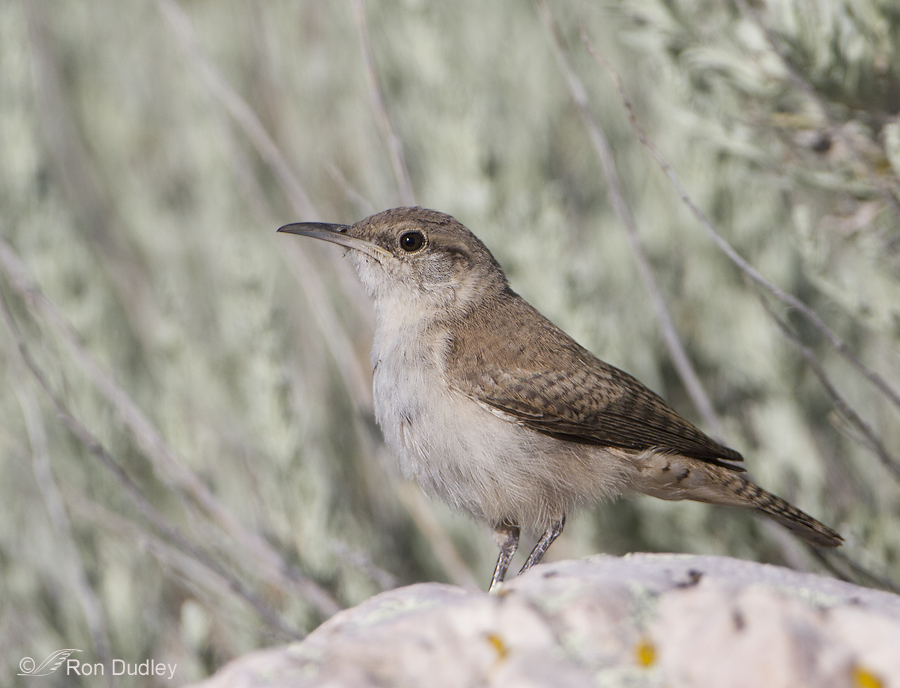
I’ll be the first to admit that I’m not particularly skilled in identifying some of the songbirds. This wren is a case in point. I’m unsure if it’s a Rock Wren or a House Wren.
So, a little help from my friends?…
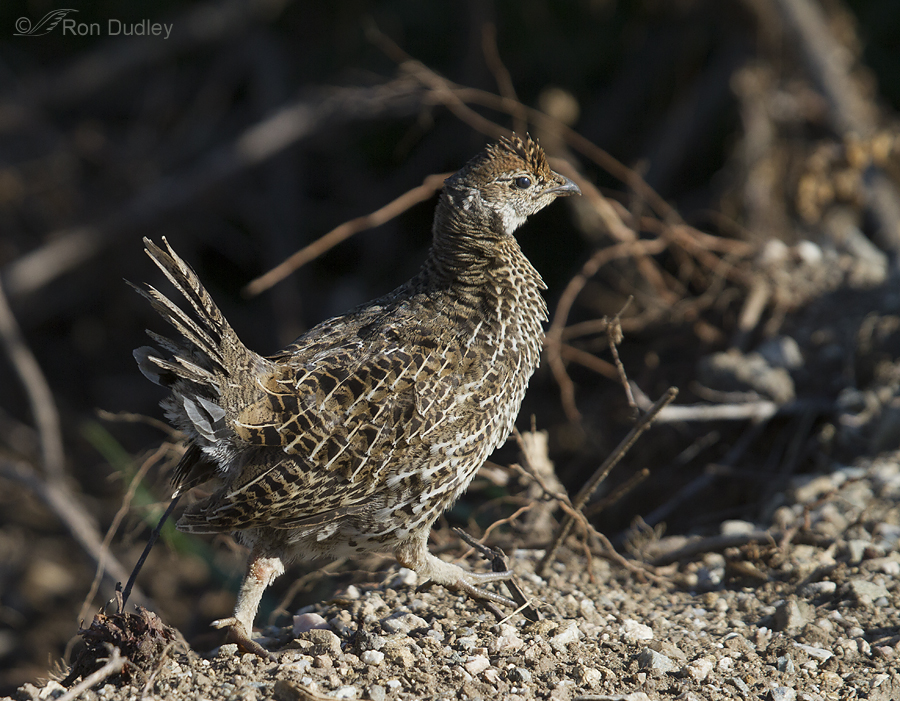
Historically, Blue Grouse have been divided into two major groups – Dusky Grouse and Sooty Grouse. But bases on recent mitochondrial DNA sequencing studies as well as on behavioral and distribution information, both groups are now considered to be separate species.