Category: Behaviors
Prairie Falcon – A Fascinating Hunting Strategy
Osprey Behavior – Something I Hadn’t Noticed Before
Red-tailed Hawk Versus Northern Harrier – Aerial Confrontation
Northern Harriers are well-known for aggressive behavior toward larger raptors intruding on their territory but seldom chase off raptor species smaller than themselves. This interesting behavioral quirk apparently results from the ability of harriers to steal food from smaller raptors. It’s easier to pilfer prey from a smaller species than it is to catch it yourself so harriers let them hang around.
Plumage Development Stages Of Male Mountain Bluebirds
While photographing a juvenile male Mountain Bluebird in Montana last week I was struck by the interesting variation in color and patterns of the adult male in breeding plumage as compared to those of the juvenile male. I thought some viewers might be interested in a photographic comparison of some of their development stages.
Why Did The Red-tailed Hawk Stand On The Road?
Avocet Wing-stretch – A Predictor Of Behavior
Some Interesting Hummingbird Biology
Hummingbirds, Butterflies And Rocky Mountain Bee Plant
Yesterday morning on Antelope Island hummingbirds were buzzing frantically over clumps of Rocky Mountain Bee Plant, a species of Cleome that produces copious amounts of nectar so it attracts hummingbirds, butterflies, bees and wasps. All four were present. As a biologist I enjoyed watching the natural processes at work here. The long, showy pollen tipped stamens and deeply buried nectar, when combined with the long bill of the bird, are the perfect combination to suit some of the biological needs of each species. The hummers were often covered with pollen.
Banded Prairie Falcon – A Fascinating Update
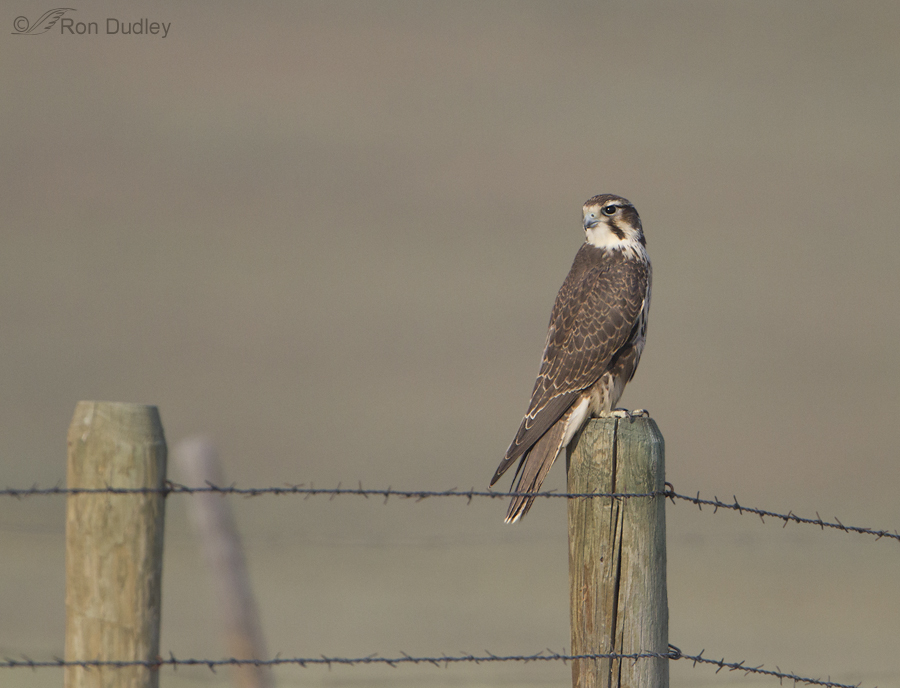
Two days ago I posted about a very tame juvenile male Prairie Falcon I photographed last week in the Centennial Valley of Montana. The bird had two bands and I was extremely curious about where, when and why the falcon was banded and by whom so I asked for any insight my readers might have about the bands. Several of you jumped in with advice and suggestions, for which I’m much appreciative. But it was the superb sleuthing of my friend Mike Shaw that paid huge dividends. Mike did some research and learned that the colored band on the falcon (left foot) was issued to Doug Bell, Wildlife Program Manager for East Bay Regional Park District out of Oakland, California. On Tuesday, figuring that Doug might be interested in knowing that his California bird was now in the wilds of Montana, I emailed him with a link to that blog post and an offer to supply any more information about my encounter with that bird that he’d be interested in. I also asked him if he might tell me a little about his experience with the falcon. Yesterday Doug responded generously with information and photos. Since many of my readers expressed an interest in knowing about the history of this young bird I decided to update you with a new post rather than add an addendum to the previous post that many might not see. Besides, there’s a lot of new “stuff” here. Image property of East Bay Regional Park District – used by permission Doug and his team banded “my” Prairie Falcon…
Montana Prairie Falcons And Hordes of Grasshoppers
I learned something last week in Montana’s Centennial Valley – Prairie Falcons eat insects.
In the past I’ve only seen them eat birds and small mammals and cursory research had backed up that observation but if you dig a little deeper in your research (Birds of North America Online, for example) you’ll find mention of lizards and insects being included in their diet. My friend (master falconer) Mark Runnels says that “Prairie Falcons will eat anything. In really bad years I have even heard of them feeding on carrion. You’ll never see a Peregrine do that!”
Western Grebe Mated With Clark’s Grebe
Fledgling Loggerhead Shrike Begging For Food
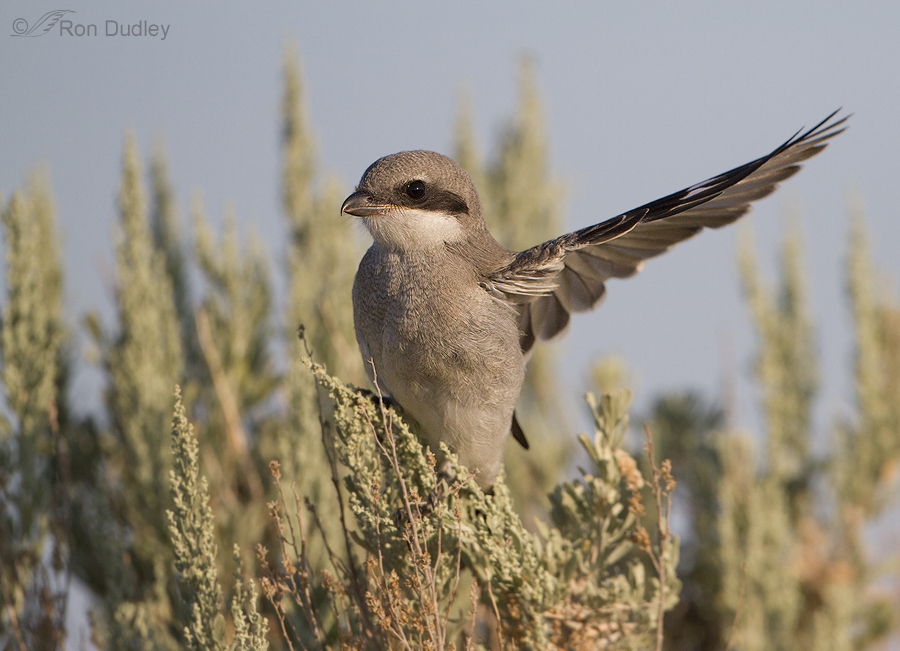
I photographed a family of very cooperative Loggerhead Shrikes last week on Antelope Island. The young birds had already fledged and were very actively exploring their world, strengthening their wing muscles by flying from perch to perch and testing a variety of objects for their potential food value.
And they were gutsy! Several times a juvenile landed on the tailgate of my pickup as you can see here.
Pied-billed Grebe On Nest
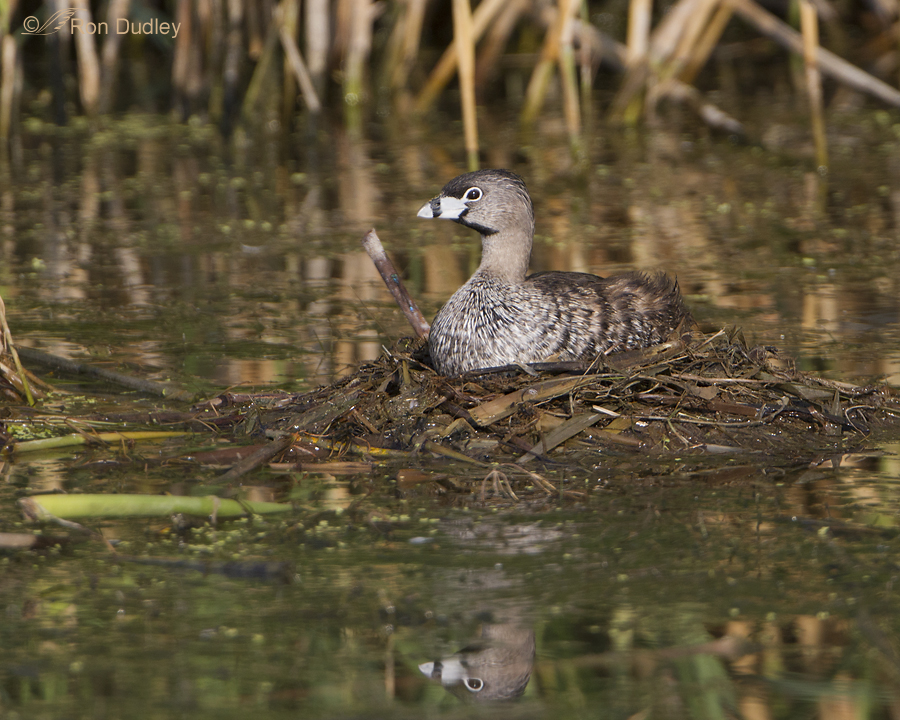
Yesterday morning I was very surprised to see this active nest so close to the loop road at Bear River Migratory Bird Refuge. Both parents incubate and the sexes are similar so I don’t know if this was the male or the female but the apparent mate of this bird was hanging around in the general vicinity.
Red-tailed Hawks – Creatures Of Habit
Last summer (these first two photos were taken July 22, 2012) I photographed this mated pair of Red-tailed Hawks in western Montana. On most mornings and some evenings I could almost count on finding them perched in the same old snag and even on the same branch of the dead tree.
Earlier this month on my first Montana camping trip I found the same mated pair on the same perch (male at bottom, female up top).
Prairie Falcon – A Fascinating Hunting Strategy
Osprey Behavior – Something I Hadn’t Noticed Before
Red-tailed Hawk Versus Northern Harrier – Aerial Confrontation
Northern Harriers are well-known for aggressive behavior toward larger raptors intruding on their territory but seldom chase off raptor species smaller than themselves. This interesting behavioral quirk apparently results from the ability of harriers to steal food from smaller raptors. It’s easier to pilfer prey from a smaller species than it is to catch it yourself so harriers let them hang around.
Plumage Development Stages Of Male Mountain Bluebirds
While photographing a juvenile male Mountain Bluebird in Montana last week I was struck by the interesting variation in color and patterns of the adult male in breeding plumage as compared to those of the juvenile male. I thought some viewers might be interested in a photographic comparison of some of their development stages.
Why Did The Red-tailed Hawk Stand On The Road?
Avocet Wing-stretch – A Predictor Of Behavior
Some Interesting Hummingbird Biology
Hummingbirds, Butterflies And Rocky Mountain Bee Plant
Yesterday morning on Antelope Island hummingbirds were buzzing frantically over clumps of Rocky Mountain Bee Plant, a species of Cleome that produces copious amounts of nectar so it attracts hummingbirds, butterflies, bees and wasps. All four were present. As a biologist I enjoyed watching the natural processes at work here. The long, showy pollen tipped stamens and deeply buried nectar, when combined with the long bill of the bird, are the perfect combination to suit some of the biological needs of each species. The hummers were often covered with pollen.
Banded Prairie Falcon – A Fascinating Update
Two days ago I posted about a very tame juvenile male Prairie Falcon I photographed last week in the Centennial Valley of Montana. The bird had two bands and I was extremely curious about where, when and why the falcon was banded and by whom so I asked for any insight my readers might have about the bands. Several of you jumped in with advice and suggestions, for which I’m much appreciative. But it was the superb sleuthing of my friend Mike Shaw that paid huge dividends. Mike did some research and learned that the colored band on the falcon (left foot) was issued to Doug Bell, Wildlife Program Manager for East Bay Regional Park District out of Oakland, California. On Tuesday, figuring that Doug might be interested in knowing that his California bird was now in the wilds of Montana, I emailed him with a link to that blog post and an offer to supply any more information about my encounter with that bird that he’d be interested in. I also asked him if he might tell me a little about his experience with the falcon. Yesterday Doug responded generously with information and photos. Since many of my readers expressed an interest in knowing about the history of this young bird I decided to update you with a new post rather than add an addendum to the previous post that many might not see. Besides, there’s a lot of new “stuff” here. Image property of East Bay Regional Park District – used by permission Doug and his team banded “my” Prairie Falcon…
Montana Prairie Falcons And Hordes of Grasshoppers
I learned something last week in Montana’s Centennial Valley – Prairie Falcons eat insects.
In the past I’ve only seen them eat birds and small mammals and cursory research had backed up that observation but if you dig a little deeper in your research (Birds of North America Online, for example) you’ll find mention of lizards and insects being included in their diet. My friend (master falconer) Mark Runnels says that “Prairie Falcons will eat anything. In really bad years I have even heard of them feeding on carrion. You’ll never see a Peregrine do that!”
Western Grebe Mated With Clark’s Grebe
Fledgling Loggerhead Shrike Begging For Food
I photographed a family of very cooperative Loggerhead Shrikes last week on Antelope Island. The young birds had already fledged and were very actively exploring their world, strengthening their wing muscles by flying from perch to perch and testing a variety of objects for their potential food value.
And they were gutsy! Several times a juvenile landed on the tailgate of my pickup as you can see here.
Pied-billed Grebe On Nest
Yesterday morning I was very surprised to see this active nest so close to the loop road at Bear River Migratory Bird Refuge. Both parents incubate and the sexes are similar so I don’t know if this was the male or the female but the apparent mate of this bird was hanging around in the general vicinity.
Red-tailed Hawks – Creatures Of Habit
Last summer (these first two photos were taken July 22, 2012) I photographed this mated pair of Red-tailed Hawks in western Montana. On most mornings and some evenings I could almost count on finding them perched in the same old snag and even on the same branch of the dead tree.
Earlier this month on my first Montana camping trip I found the same mated pair on the same perch (male at bottom, female up top).