



An Unlikely Alliance To Save The Greater Sage-Grouse
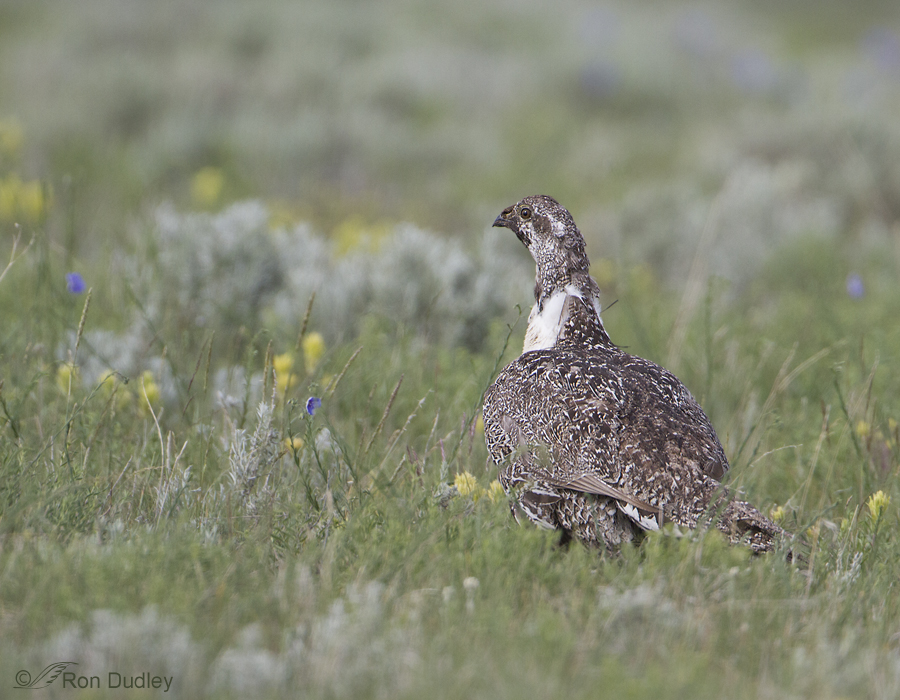
The Greater Sage-Grouse is a spectacular bird in many ways. They’re our largest grouse – males may approach 7 lbs. The dramatic breeding display of the males on the lek is mind-boggling. And to have one of these birds flush at your feet is literally a heart-stopping experience – something I know from experience.
But these birds are in great danger of extinction due to dramatic loss of habitat.
Western Grebe Mated With Clark’s Grebe
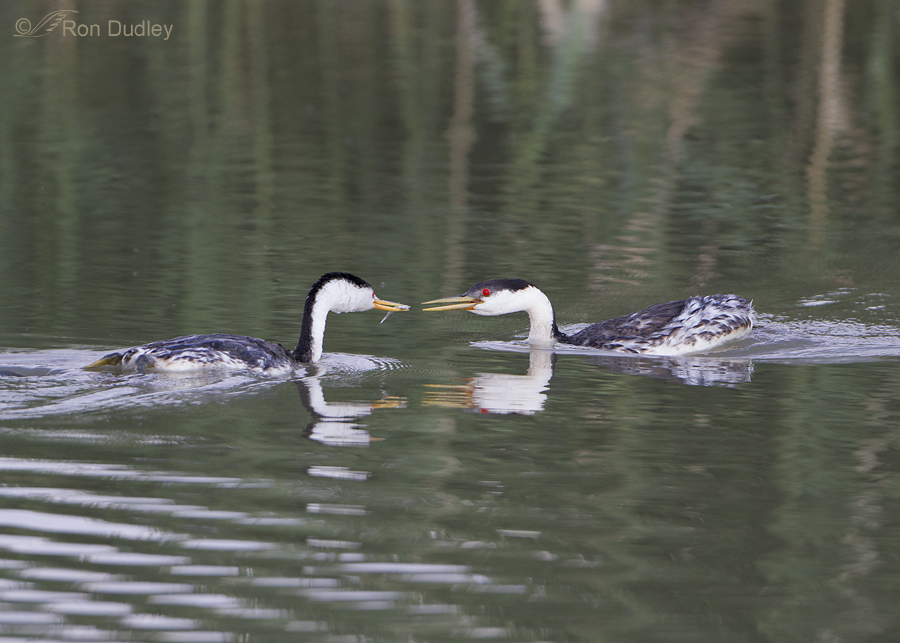
In the years I’ve watched and photographed the behaviors of both species I’ve never before seen a Western Grebe mated to a Clark’s Grebe. Mixed species pairs are uncommon to rare so to have seen this natural but unusual behavior was pretty special for me.
Some Hope For Barn Owls
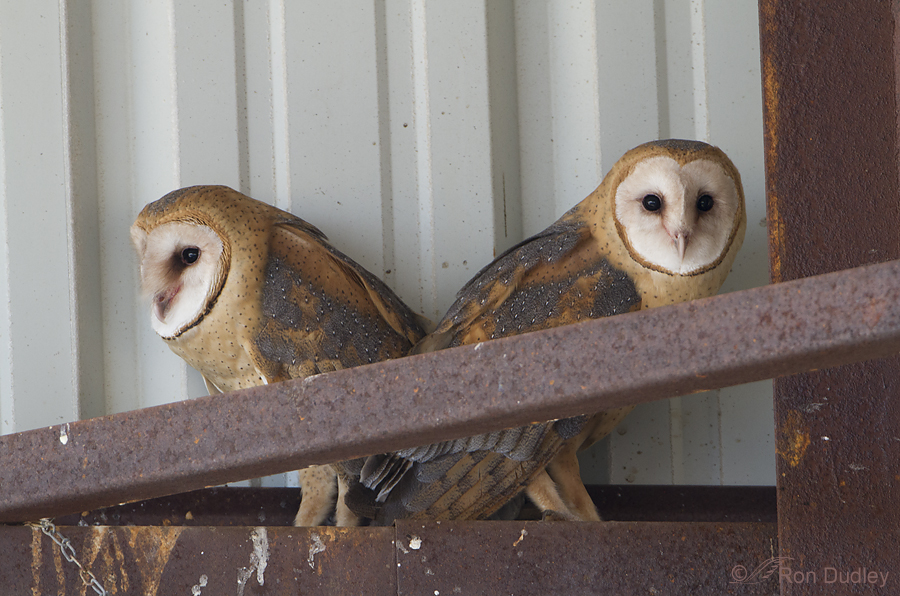
I’ve reported previously on this blog that Barn Owl populations took a huge hit this past winter in northern Utah. It was dreadfully cold for much of the winter with lots of snow. Normally that’s not a huge problem for these owls but with deep snow on the ground we had a warm spell that melted the surface of the snow and immediately after that we had an extended cold snap. Those conditions caused a hard crust of ice to form on the snow surface that lasted for weeks.
Fledgling Loggerhead Shrike Begging For Food
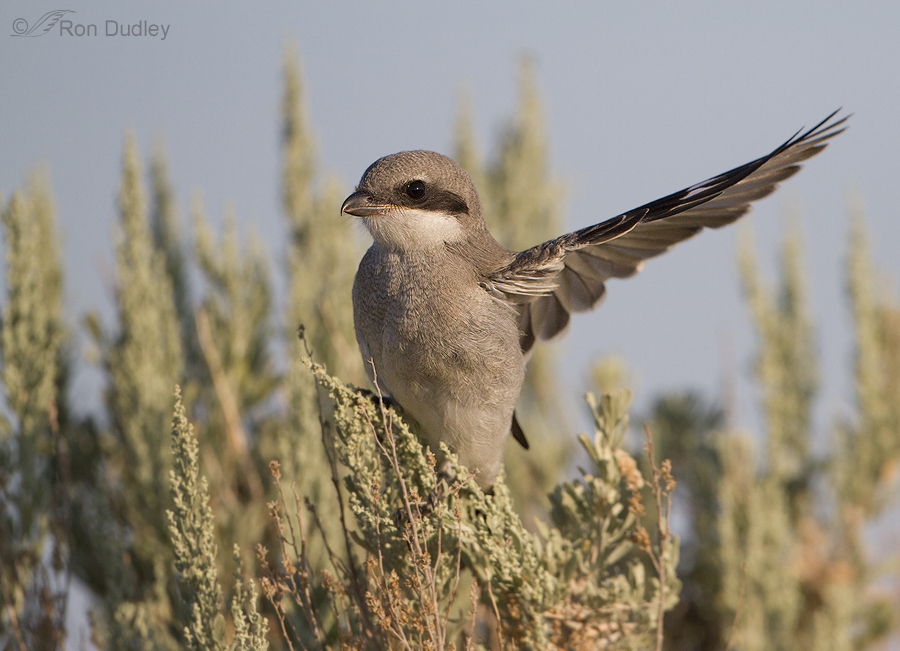
I photographed a family of very cooperative Loggerhead Shrikes last week on Antelope Island. The young birds had already fledged and were very actively exploring their world, strengthening their wing muscles by flying from perch to perch and testing a variety of objects for their potential food value.
And they were gutsy! Several times a juvenile landed on the tailgate of my pickup as you can see here.
Horned Lark On Mullein
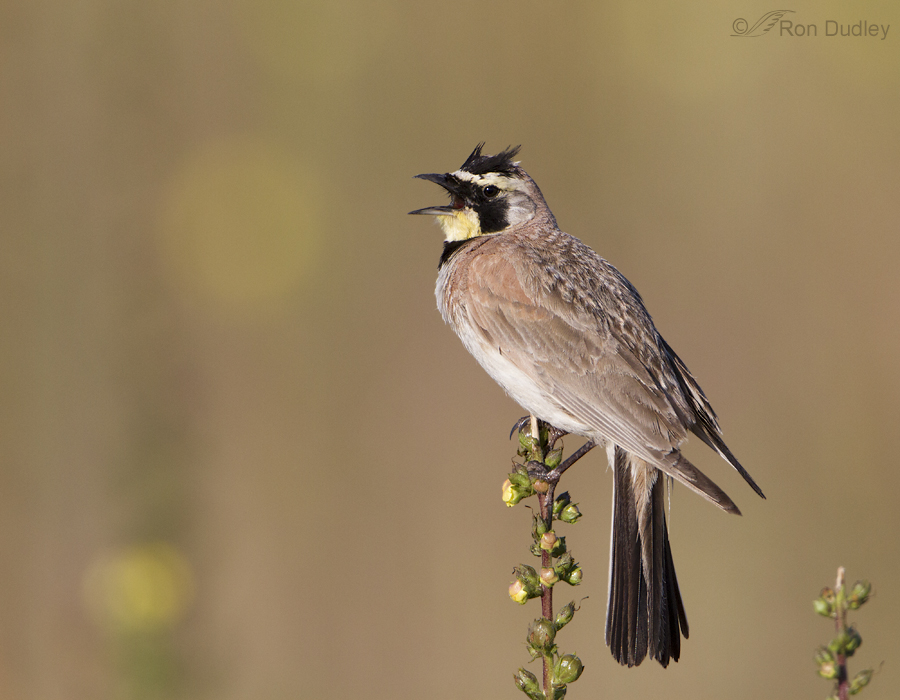
For the past several weeks Antelope Island has been awash in the glorious yellows of moth mullein. It doesn’t cover the entire island but there are areas where entire hillsides have been festooned in mullein yellow.
Pied-billed Grebe On Nest
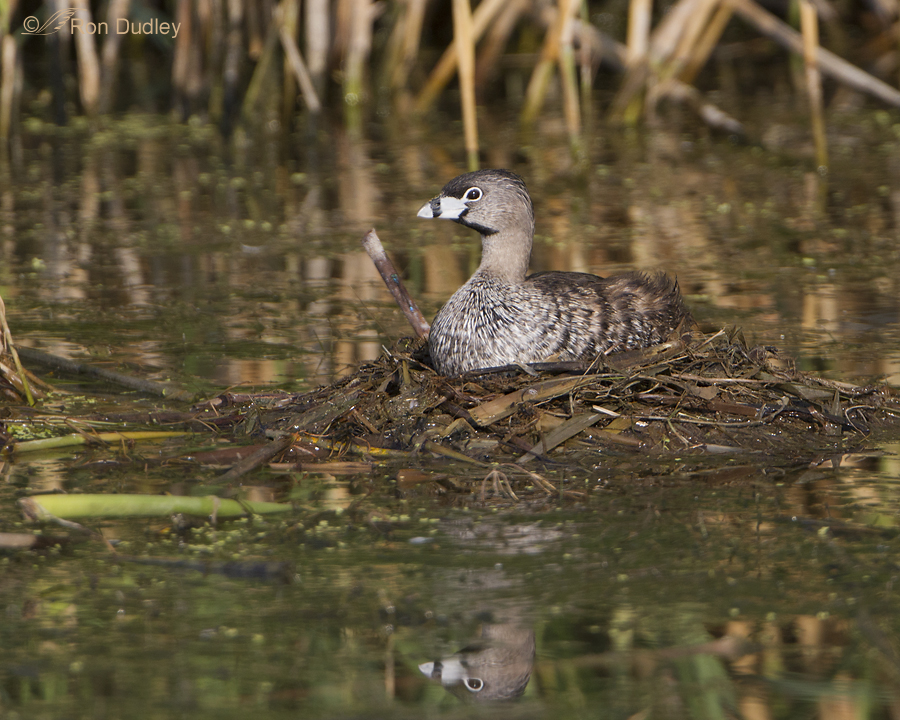
Yesterday morning I was very surprised to see this active nest so close to the loop road at Bear River Migratory Bird Refuge. Both parents incubate and the sexes are similar so I don’t know if this was the male or the female but the apparent mate of this bird was hanging around in the general vicinity.
Pronghorn Fawns
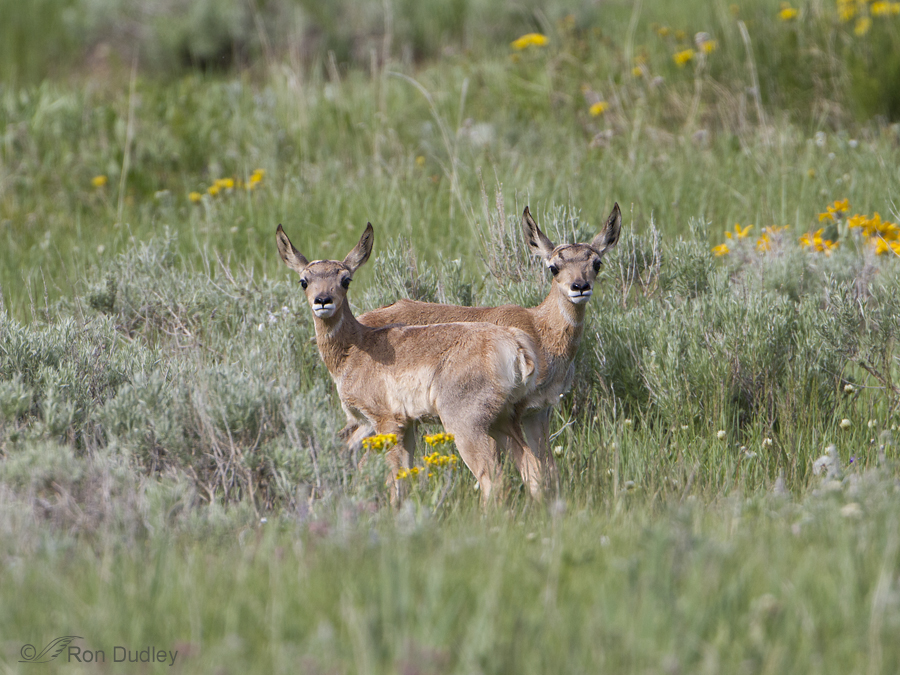
On our last trip to southwest Montana a few weeks ago we encountered a doe pronghorn and her twin fawns. This is cold, high country and fawning season had just begun so other than these two we saw very few fawns, even though pronghorn numbers were high.
I’ll try to avoid the word “cute” throughout this post but it won’t be easy.
A Shrike, A Deer Fly And A Feathered Photography Update
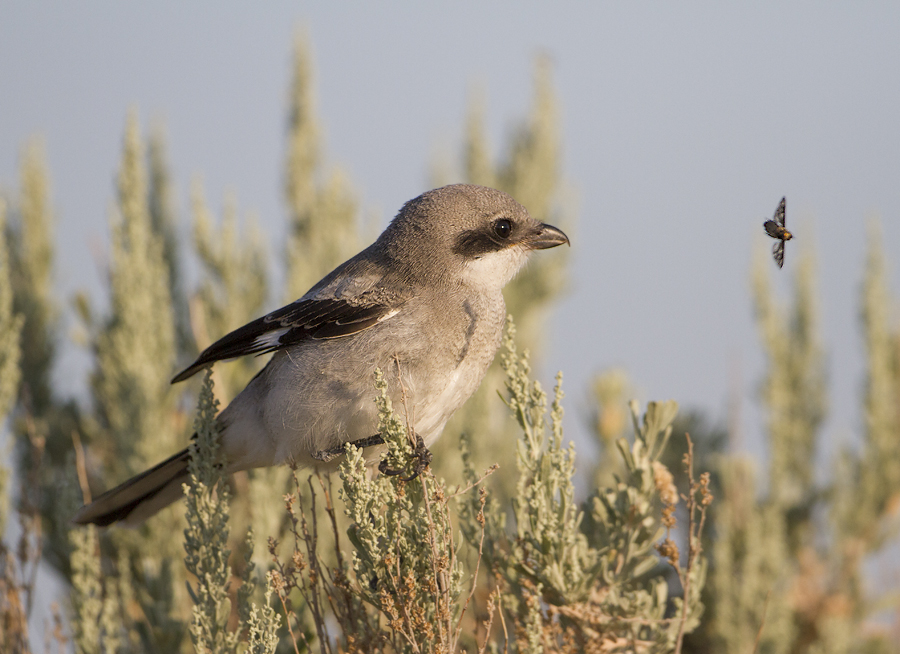
I thought this image was particularly interesting for several reasons.
This juvenile had been enthusiastically begging for food when a deer fly (I believe) unexpectedly appeared on the scene. A split second prior to this shot the bird had its wings out, its beak open and was squawking to be fed but the focus of its attention changed immediately when the biting insect appeared.
My Favorite Shrike Flight Shot
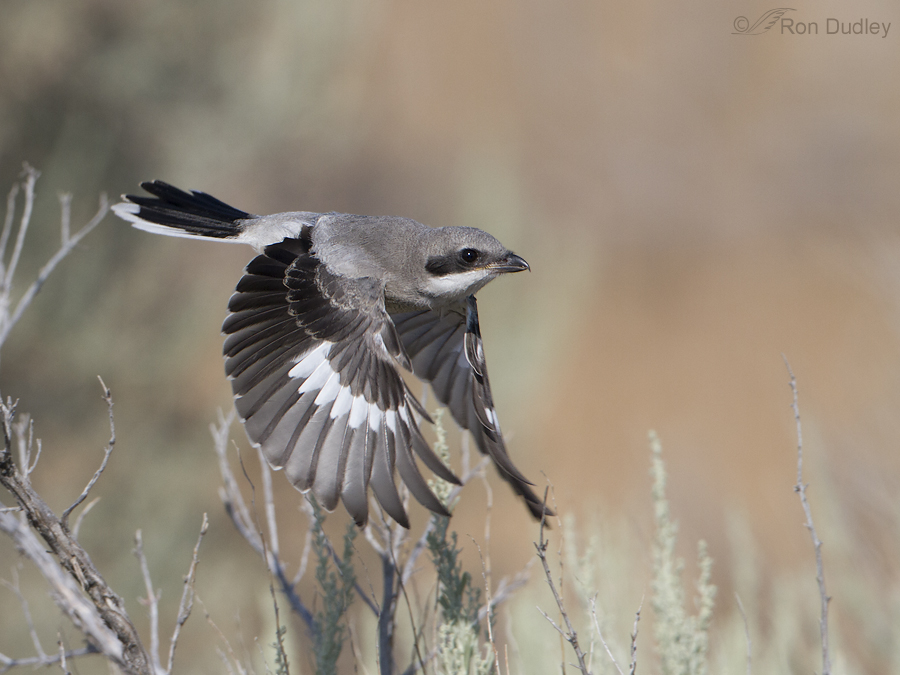
I spent some more time with my favorite Loggerhead Shrike family yesterday morning and was able to get this image of a juvenile soon after lift-off. This may be my favorite shrike flight shot so far.
Juvenile Loggerhead Shrike Take-off
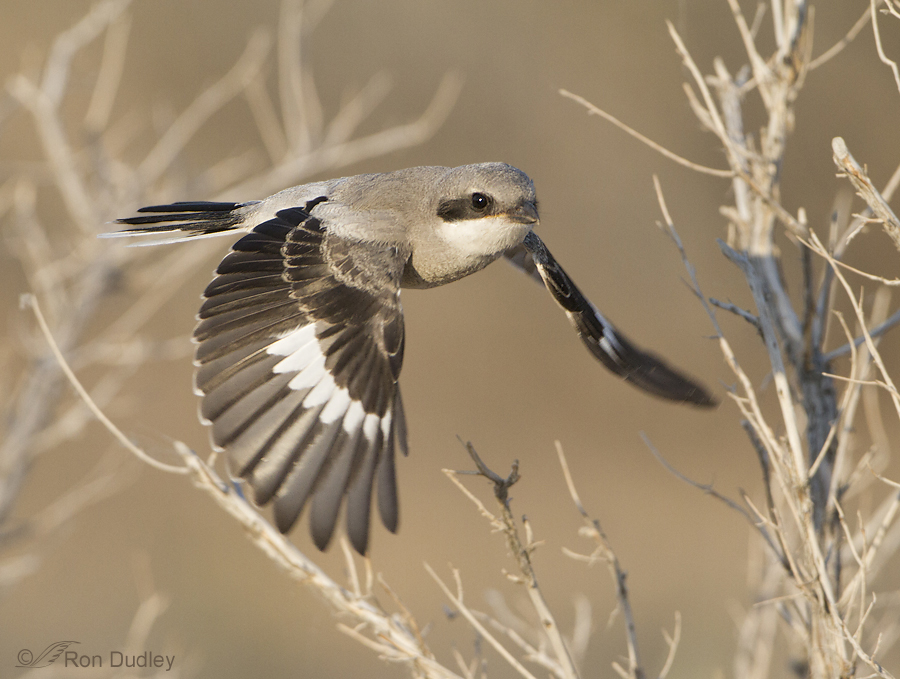
Many of the young Loggerhead Shrikes on Antelope Island have now fledged and are learning the ropes. They’re ornery, fun, fierce and fearless. Twice I’ve had one almost fly into my open pickup window, another one very nearly landed on my lens hood sticking out a window and yet another landed on the pickup itself.